We are recruiting graduate students!
If you would like to pursue your Master's or PhD in disturbance ecology, please email Gio McClenachan with your research interests and to find out more. We are recruiting for both coastal ecology and socio-ecological systems research
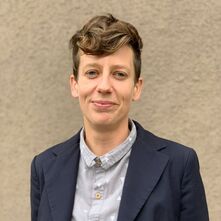 Dr. Gio McClenachan, PI
Gio McClenachan is a transdisciplinary coastal ecologist whose research focuses on investigating the drivers of ecosystem and societal coastal change.
Understanding the interactions between global-scale climate variables and local-scale factors is essential in adapting to and mitigating climate change impacts. Gio studies these changes on multiple spatial and temporal scales, using GIS, remote sensing, and climate data to document broadscale shifts over time as well as field experiments to measure community-level response.
Originally from the great state of Vermont, Gio received her PhD from LSU in Oceanography & Coastal Sciences and BS from Dickinson College in Environmental Science. She's currently an Assistant Professor and head of CDEL at Stony Brook University.
Understanding the interactions between global-scale climate variables and local-scale factors is essential in adapting to and mitigating climate change impacts. Gio studies these changes on multiple spatial and temporal scales, using GIS, remote sensing, and climate data to document broadscale shifts over time as well as field experiments to measure community-level response.
Originally from the great state of Vermont, Gio received her PhD from LSU in Oceanography & Coastal Sciences and BS from Dickinson College in Environmental Science. She's currently an Assistant Professor and head of CDEL at Stony Brook University.
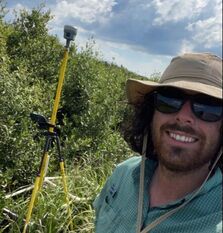 Erik Johnson, MS Student
Erik Johnson is a graduate research assistant whose thesis research is focused on characterizing the emergent and aquatic vegetation communities of Louisiana’s coastal ridges. He has an interest in using geospatial data science to answer research questions.
Erik is from Bossier City, Louisiana, and received his BS in Environmental Biology from Tulane University. After spending a season working as a fisheries observer on the west coast, he returned to Louisiana to work on coastal restoration research and further develop skills in GIS and experimental design.
Erik is from Bossier City, Louisiana, and received his BS in Environmental Biology from Tulane University. After spending a season working as a fisheries observer on the west coast, he returned to Louisiana to work on coastal restoration research and further develop skills in GIS and experimental design.
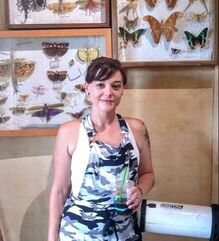 Marriah Hebert
Marriah Hebert is an undergraduate researcher in CDEL working on multiple coastal research projects. As well as being a part of the larger lab projects, she is researching how varying vegetation habitats in coastal southeastern Louisiana affect insect community compositions. She is especially interested in the impact of the shift from salt marsh to mangrove dominance. Marriah is from Houma, LA and currently a junior majoring in biology with a minor in environmental science.